

By Robert Antonacci, M.D. and David Miller
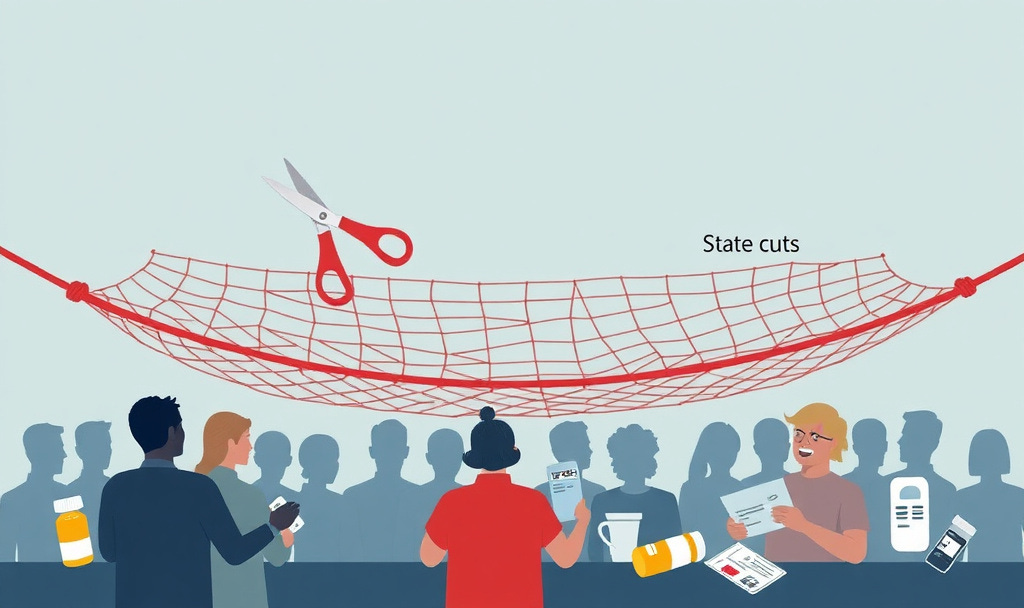
Across the United States, state HIV programs are facing unprecedented financial pressures that threaten access to lifesaving treatment and care for thousands of Americans living with HIV. Recent developments within state AIDS Drug Assistance Programs (ADAPs)—the cornerstone of the Ryan White HIV/AIDS Program—signal a troubling shift toward service restrictions, tighter eligibility standards, and reduced access to medications that have long served as the foundation of effective HIV treatment.
For more than three decades, the Ryan White HIV/AIDS Program has functioned as the nation’s HIV safety net, ensuring that individuals living with HIV can obtain treatment regardless of their ability to pay. Today, however, stagnant federal funding, rising pharmaceutical costs, growing enrollment, and increasing insurance expenses are forcing states to make difficult decisions that could undermine decades of progress in HIV care.
A Return to Cost-Containment Measures
Historically, ADAP programs have relied on waiting lists and other cost-containment strategies during periods of financial strain. While federal emergency funding helped eliminate widespread waiting lists by 2013, states are once again implementing measures designed to control costs.
Florida has emerged as one of the most visible examples. The state recently announced plans to dramatically reduce income eligibility for its ADAP program—from 400% of the Federal Poverty Level (FPL) to 130% FPL. For an individual, this change would reduce the maximum qualifying annual income from approximately $63,840 to just $20,748.
In addition, Florida has proposed removing Biktarvy—the nation’s most widely prescribed HIV medication—from its formulary and scaling back insurance assistance programs that help individuals maintain comprehensive health coverage.
These changes have generated significant concern among patients, providers, and advocacy organizations because treatment interruptions can lead to poorer health outcomes, increased morbidity, and greater risk of HIV transmission.
A National Trend, Not an Isolated Event
Florida is not alone.
According to data from the National Alliance of State and Territorial AIDS Directors (NASTAD), nearly half of all state ADAP programs have either implemented or are actively considering cost-containment measures. Several states, including Pennsylvania, Kansas, Delaware, and Rhode Island, have already reduced eligibility thresholds.
Other states are exploring options such as:
Limiting formularies and covered medications
Restricting insurance assistance programs
Reducing support services
Tightening recertification requirements
Establishing annual spending caps
Considering future waiting lists
Although no state has yet reinstated formal waiting lists, several—including Arkansas, Louisiana, and New Jersey—have reportedly considered them as a potential future measure should financial pressures continue to worsen.
Why Are ADAP Programs Under Financial Stress?
Federal Funding Has Lost Purchasing Power
While congressional appropriations for ADAP have remained relatively stable in nominal dollars for many years, inflation has steadily eroded their real value. When adjusted for inflation, federal ADAP funding has declined substantially since its peak in the mid-2000s. In practical terms, today’s funding levels provide purchasing power comparable to those available more than two decades ago, despite significant increases in both enrollment and treatment costs.
This funding stagnation reflects a broader failure of federal leadership. Under both the Trump Administration and Republican-led Congresses, Ryan White appropriations largely failed to keep pace with inflation and rising healthcare costs. Although annual appropriations often appeared stable on paper, flat funding in the face of expanding demand effectively amounted to a reduction in federal support. The result has been a gradual transfer of financial responsibility to states already struggling with competing budget priorities.
Enrollment Has Grown Dramatically
The number of Americans relying on ADAP services has increased significantly over the past two decades. Expanded treatment recommendations now encourage immediate initiation of antiretroviral therapy following diagnosis, resulting in more individuals receiving treatment earlier and remaining in care longer.
As enrollment grows while funding remains relatively flat, available resources must be stretched further each year. The mismatch between growing need and stagnant federal investment has become increasingly unsustainable.
HIV Medication Costs Continue to Rise
Modern HIV therapies have transformed HIV from a fatal disease into a manageable chronic condition. However, these advances come with increasing costs.
Many recommended treatment regimens now exceed $60,000 annually at wholesale acquisition prices. Although ADAP programs receive discounts through federal pricing mechanisms and manufacturer rebate agreements, rising drug costs remain one of the most significant financial pressures facing state programs.
Biktarvy, currently the most prescribed HIV treatment regimen in the United States, exemplifies this challenge. Its effectiveness and convenience have made it the preferred therapy for many patients, yet its cost places additional strain on state budgets already operating under constrained funding.
Insurance Costs Are Escalating
Another major challenge is the rising cost of health insurance coverage.
ADAP programs frequently assist eligible clients with insurance premiums, allowing individuals to access broader healthcare services beyond HIV treatment alone. However, recent increases in marketplace premiums combined with the expiration of enhanced Affordable Care Act premium tax credits have significantly increased costs for both patients and state programs.
The expiration of these enhanced tax credits represents another policy decision with direct consequences for people living with HIV. Congressional Republicans declined to extend the subsidies that had dramatically improved affordability for low- and middle-income Americans. As a result, many individuals now face sharply higher insurance premiums, while ADAP programs must absorb additional costs to maintain coverage for eligible clients. The burden falls particularly hard on working Americans who earn too much to qualify for traditional assistance programs but cannot reasonably afford rising healthcare expenses.
Many individuals who previously benefited from enhanced subsidies are now facing substantially higher premiums. For ADAP programs that subsidize these plans, the financial impact is considerable.
The Fight to Protect Ryan White Funding
As states struggle with mounting HIV care costs and shrinking resources, national advocates have worked aggressively to protect the Ryan White HIV/AIDS Program from deeper federal cuts.
Among the most vocal advocates has been Carl Baloney, Jr., President and Chief Executive Officer of AIDS United, who has repeatedly warned Congress that decades of progress against HIV are at risk if federal investments fail to keep pace with growing need. In testimony regarding Fiscal Year 2026 appropriations, Baloney urged lawmakers to increase federal investments in HIV treatment and prevention programs and cautioned that recent progress in HIV care and prevention “is in grave danger.”
Those warnings proved well-founded. During budget negotiations, House Republicans proposed reducing federal HIV investments, including significant reductions affecting Ryan White services and other HIV-related programs. HIV advocates argued that such reductions would have undermined care systems relied upon by hundreds of thousands of Americans living with HIV.
Following congressional negotiations over the FY2026 budget, Baloney praised lawmakers for restoring funding that had been targeted for elimination. As he stated:
“Congress is demonstrating once more that there is bipartisan agreement on the basics: HIV prevention works, treatment saves lives, and stable housing and strong public health systems are non-negotiable if we’re serious about ending the HIV epidemic.”
Baloney specifically highlighted the restoration of hundreds of millions of dollars in Ryan White HIV/AIDS Program funding that had been removed from earlier House proposals.
Yet the fact that such funding had to be restored in the first place illustrates the fragility of the federal commitment to HIV care. While advocates successfully prevented some of the most damaging proposed cuts, Ryan White funding continues to lose purchasing power due to inflation, rising drug prices, and growing enrollment. As AIDS United and other advocates have argued, preserving funding is no longer enough. Without meaningful increases in federal investment, states will continue facing impossible choices that ultimately threaten access to lifesaving treatment.
The consequences of restricting HIV treatment access extend far beyond individual patients.
Consistent engagement in care and uninterrupted access to antiretroviral therapy are essential components of modern HIV prevention strategies. Effective treatment suppresses viral load, improves health outcomes, reduces mortality, and virtually eliminates the risk of sexual HIV transmission.
When individuals lose access to treatment due to financial barriers, the public health consequences can be profound. Reduced treatment adherence and interruptions in care increase the risk of disease progression while potentially contributing to new HIV infections.
In short, restricting access to HIV treatment may ultimately prove more costly—both financially and socially—than maintaining robust support systems.
The irony is difficult to ignore. National leaders continue to speak about ending the HIV epidemic, yet policy decisions at the federal level have weakened the very programs responsible for the nation’s success in HIV treatment and prevention. Ambitious public health goals cannot be achieved while simultaneously allowing the financial foundations of those efforts to erode.
The growing fiscal challenges confronting ADAP programs should serve as a warning to policymakers at every level of government.
State programs have attempted to bridge funding gaps through supplemental appropriations, pharmaceutical rebates, and emergency funding mechanisms. Yet these efforts are increasingly insufficient to offset rising enrollment, escalating drug prices, and higher insurance costs.
Without meaningful investments and long-term funding solutions, more states may follow the path of restricting eligibility, reducing benefits, or considering waiting lists. Such actions risk reversing decades of progress in HIV treatment and prevention.
The Ryan White HIV/AIDS Program has been one of the nation’s most successful public health initiatives. Preserving its ability to deliver comprehensive care is not simply a healthcare priority—it is a public health imperative.
Congress and the Administration must recognize that ending the HIV epidemic requires more than campaign promises and policy statements. It requires sustained federal investment, protection of affordable insurance coverage, and a renewed commitment to the Ryan White Program that has served as a lifeline for hundreds of thousands of Americans. Failure to act will leave states with increasingly impossible choices—and leave vulnerable patients paying the price.
This commentary is based on recent analyses of ADAP financing and state program trends reported by the Kaiser Family Foundation (KFF), the National Alliance of State and Territorial AIDS Directors (NASTAD), and advocacy materials from AIDS United.