

By David Miller and Chad S. Johnson Esq
Many AIDS 2017 attendees in Paris were disappointed by the neglect of a timely, critical focus on the HIV challenges in Venezuela caused by the abject failure of governance, human rights, and the rule of law in Caracas. With the country falling apart and people unable to obtain essential HIV medications and basic medical supplies, the lack of a concerted effort to address this urgent human tragedy at AIDS 2017 seemed like an astounding failure by the most powerful stakeholders in the epidemic. However, an equally pressing dynamic has existed for years without mainstream media coverage in many countries in Eastern Europe and Central Asia (EECA). While not making the daily headlines, the EECA region has the highest new HIV infection rate in the world at 57% between 2010 and 2015 according to AVERT, a statistic highlighted at the AIDS 2017 teaser session on the upcoming 22nd International AIDS Conference in Amsterdam, Netherlands underway during the next days in July 2018 (AIDS 2018).
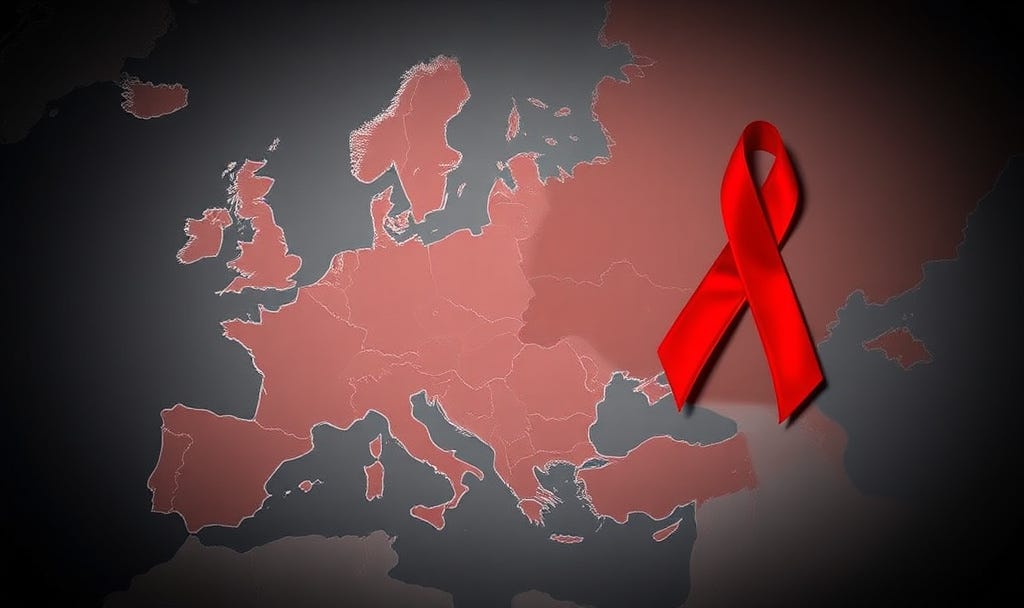
The AIDS 2017 session emphasized that one of Amsterdam’s top five objectives is to change the dynamic in the EECA where governments, institutions, orthodox religions, society, law enforcement and criminality, and international organizations fail vulnerable populations. Session participants noted that this EECA problem was on the agenda during the 19th IAC in Vienna in 2010, a conference now deemed a failure in this regard. Leading up to AIDS 2010, the WHO reported that the epidemic in Eastern Europe “… can be ascribed to government intransigence, public ignorance and the criminalization of risky behaviors, compounded by poverty, social exclusion and political and economic turmoil.” These conditions have not significantly changed in Eastern Europe and continued to be mirrored in Central Asia.
Consequently, AIDS 2018 Local Co-Chair Dr. Peter Reiss of Amsterdam and International Co-Chair Dr. Linda Gail-Bekker of Cape Town, South Africa, committed to shine a spotlight on people left behind in the international response to the AIDS epidemic and to prompt a vigorous discussion about the reasons that the EECA region is an outlier in the progress seen around the world. The theme of AIDS 2018, “Breaking Barriers, Building Bridges,” speaks to some of the unique contributing factors beyond unsafe sexual practices, including language, culture, lack of human rights and freedom of information, and “relative” prosperity (and with it, non-qualification for various international assistance programs for middle-income nations). Additional factors on the rise in the EECA region include IV drug use in countries disapproving of needle-exchange programs, migration of female sex workers who are shamed into the shadows by conservative societies, and the refugee crisis and its health consequence.
The organizer of the session, the Dutch Ministry of Foreign Affairs, represented by Mr. Lambert Grijus, the Dutch Ambassador for Sexual and Reproductive Health & Rights and HIV/AIDS, articulated rights- and community-based approaches to more effectively reach key populations in the EECA region, along with putting mechanisms in place to hold politicians accountable in regional and international diplomatic settings for shortcomings in HIV-related awareness, funding and policy. Dr. Michel Kazatchkine, former Director of the Global Fund and currently the UN Secretary-General Special Envoy on HIV/AIDS in Eastern Europe and Central Asia, also underscored the importance of aggressive work with top-level politicians as key to breaking the log jam in the region. Unless governments acknowledge and take ownership of the growing HIV problem, outside efforts will continue to fail. In some EECA nations, leaders are in denial that HIV/AIDS even exist in their countries – typifying the difficulties that stand between an increasing epidemic and effective solutions.
On top of government inaction and denial, several avenues of international support are not available as policy enticements since median incomes disqualify funding and assistant for many EECA countries – incomes that are by no means truly prosperous. Traditional and orthodox populations in rights-limited societies add to the slow demand for and pace of change. Communication and the free flow of HIV-related information are limited, and a lack of historical commitment to Russian language-based prevention and treatment programs is recognized as a problem for much of the EECA region.
The eastern view from Amsterdam is gloomy but there are glimmers of light. AIDS 2018 will lead to critical analysis of potential solutions for the epidemic in the EECA. Having hit the ground running on this 19th Day of July, 2018, we hope for an effective conference. If the welcome provided at Amsterdam’s Schiphol Airport to conference participants is any sign, maybe this IAC will come closer to meeting its goals than previous conferences. The response to this epidemic is constrained by resources and shaped by priorities, funding and discrimination and always will be. It is disappointing, for example, that there are no sessions on the impact of HIV on war veterans around the world who suffer disproportionately. The IAS community does not even recognize HIV veterans as a key population group for study and focus. While different, this is reminiscent of AIDS 2017’s lack of programmatic flexibility and basic resolve to act on the dire circumstances in Venezuela, discussed above, when we assembled in Paris.
AIDS 2018 in Amsterdam has an opportunity for real success. The next week will test us all, and we remain cautiously hopeful.
This article originally appeared in